
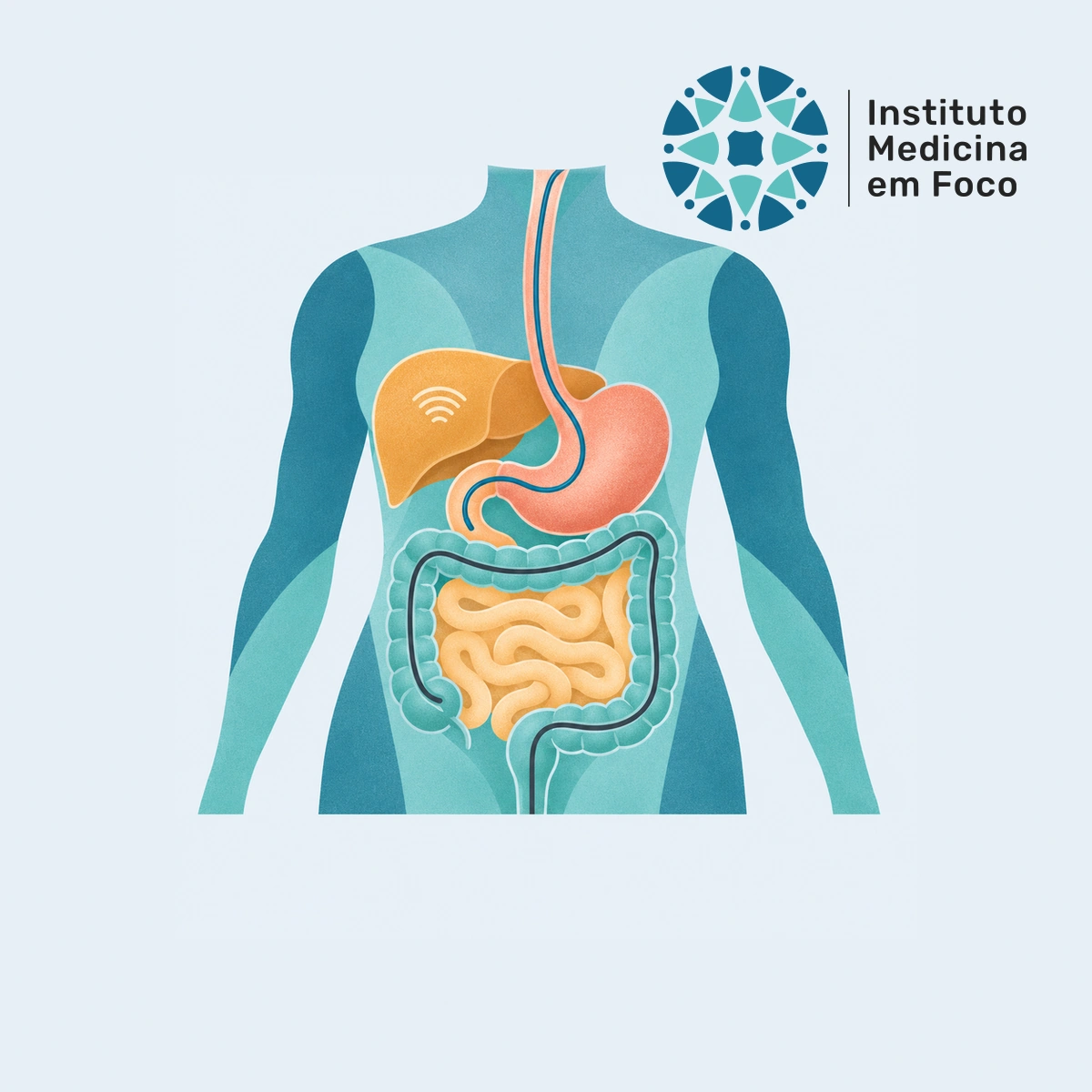
Endoscopy
Starting atR$ 590
Examination of the esophagus, stomach, and duodenum to investigate digestive symptoms and guide care; includes endoscopic procedures when indicated.
AbasBradescoMediserviceOmintSistema Total de Saúde
Schedule an endoscopySchedule an in-person or online consultation or in-person tests with Dr. Daniel Alvarenga at Instituto Medicina em Foco, in Consolação, São Paulo.
Dr. Daniel Alvarenga practices Gastroenterology and Endoscopy at Instituto Medicina em Foco in São Paulo. He offers in-person and online consultations and performs in-person digestive tract examinations as clinically indicated.
Updated in November 2026
Dr. Daniel Alvarenga is a gastroenterologist and endoscopist. His training includes Internal Medicine, Gastroenterology, and Gastrointestinal Endoscopy. He evaluates digestive tract conditions and performs endoscopic procedures.
Gastroenterology · Endoscopy
Liver elastography
Hcor · Prevent Senior · Hospital São Paulo
Gastroenterological evaluation and gastrointestinal endoscopy. Listed procedures include endoscopic mucosal resection, intestinal dilation, and polypectomy.
TUSS procedure codes: 40201120 — Upper gastrointestinal endoscopy · 40201082 — Colonoscopy · 40202712 — Colonoscopy with endoscopic mucosal resection. Source: TUSS Table — Medicina em Foco.
2027 prices · in-person examinations. The final cost depends on the examination recommended.
Starting atR$ 590
Examination of the esophagus, stomach, and duodenum to investigate digestive symptoms and guide care; includes endoscopic procedures when indicated.
Starting atR$ 690
Evaluates the large intestine and may include sample collection during the examination; endoscopic procedures are determined based on the evaluation.
Starting atR$ 600
An ultrasound examination that helps assess liver stiffness and the risk of fibrosis.
Starting atR$ 500
Examines the anal canal and nearby area to complement the clinical evaluation.
Starting atR$ 450
Allows the rectum and part of the large intestine to be viewed using an endoscope.
Starting atR$ 300
A technique used alongside endoscopy or colonoscopy to highlight areas of the lining for closer examination.
Accepts the health insurance plans listed below. Confirm coverage for your consultation or exam when scheduling.
Schedule an endoscopy, colonoscopy, or elastography with Dr. Daniel Alvarenga at Instituto Medicina em Foco in Consolação, São Paulo. Tap each condition to learn how he evaluates and treats it.
Chronic inflammation that can affect the entire digestive tract. Dr. Daniel oversees diagnosis through colonoscopy and long-term treatment.
Chronic inflammation of the large intestine, with diarrhea and blood in the stool. Care combines medication and follow-up colonoscopies.
Pain and changes in bowel habits without damage to the intestine. Treatment begins by ruling out other causes and adjusting diet and daily routines.
Persistent constipation. Dr. Daniel investigates the cause and recommends a colonoscopy when warning signs are present.
Diarrhea lasting more than four weeks requires evaluation with stool tests, blood tests, and sometimes a colonoscopy.
Inflammation of the intestine caused by bacteria, viruses, or parasites. Diagnosis involves testing and, when necessary, a colonoscopy with biopsy.
Small pouches in the intestinal wall, common after age 50. They can become inflamed (diverticulitis) or bleed.
Rare inflammation caused by allergy-related cells in the wall of the digestive tract. Diagnosis is made through a biopsy during endoscopy or colonoscopy.
Blood in the stool always warrants evaluation. A colonoscopy locates the source and often treats it during the same examination.
Small lesions in the lining seen during colonoscopy and evaluated with a biopsy to determine the cause.
Colonoscopy finds and removes polyps before they become cancerous and allows biopsies of suspicious lesions.
Removal of polyps during colonoscopy, without an incision in the skin. It is the main way to prevent colorectal cancer.
Removal of larger, flat lesions from the lining during endoscopy or colonoscopy, avoiding surgery in selected cases.
Opening narrowed areas of the intestine with a balloon during colonoscopy, commonly performed in Crohn's disease.
Inflammation of the stomach lining. Endoscopy confirms the diagnosis and tests for H. pylori bacteria at the same time.
A bacterium in the stomach linked to gastritis, ulcers, and stomach cancer. Dr. Daniel diagnoses and treats the infection and checks that it has been eradicated.
Heartburn and a burning sensation caused by acid flowing back into the esophagus. Endoscopy checks for existing damage and guides treatment.
Part of the stomach moves up into the chest, making reflux more likely. It is seen during endoscopy, which measures the size of the hernia.
Sores in the lining that cause pain and may bleed. Endoscopy confirms the diagnosis, allows biopsies, and monitors healing.
Small raised growths in the lining found during endoscopy; some are removed during the examination.
Superficial lesions linked to anti-inflammatory medications, alcohol, or H. pylori.
A lifelong intolerance to gluten. Diagnosis involves a blood test and a duodenal biopsy during endoscopy.
Endoscopy with biopsy is the examination used to diagnose suspicious lesions early.

A change in the lining of the esophagus caused by long-standing reflux. It requires surveillance endoscopies with biopsies.
Inflammation with sores in the esophagus caused by reflux. The severity is determined during endoscopy and guides treatment.
Allergy-related inflammation that causes difficulty swallowing and food getting "stuck". Diagnosis is made through a biopsy during endoscopy.
Narrowing that makes swallowing difficult. It can be treated with dilation during endoscopy.
Enlarged veins in the esophagus in people with liver disease. Endoscopy screens for and treats them to prevent bleeding.
Lesions linked to reflux, medications, or infections, evaluated and biopsied during endoscopy.
Lesions found during endoscopy, with a biopsy to determine treatment.
Fat buildup in the liver, which is very common and often has no symptoms. Dr. Daniel assesses its severity and the risk of fibrosis and guides treatment.
An advanced stage of liver disease. Follow-up care includes regular testing and endoscopy to screen for varices.
A needle-free examination that measures liver stiffness and estimates fibrosis, avoiding a biopsy in many cases.
Watch the doctor's introduction and learn about his areas of practice.
See published coverage of Instituto Medicina em Foco.


